

OTHER PUBLICATIONS
COPYRIGHT NOTICE: Chapters in books and journal articles made available here for download are for personal use only. Any other use requires prior permission of the author or the copyright holder.
For articles and book chapters published after July 2024,
please go to CV and click on links provided.
COPYRIGHT NOTICE: Chapters in books and journal articles made available here for download are for personal use only. Any other use requires prior permission of the author or the copyright holder.
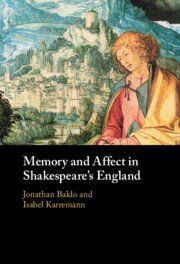
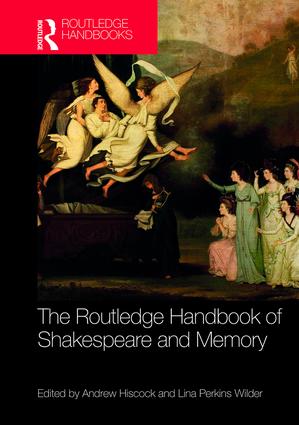
"The Tug of Memory: Affect and Invention in Shakespeare's Drama," in
Memory and Affect in Shakespeare's England, ed. Jonathan Baldo and Isabel Karremann (Cambridge University Press, 2023), 201-219
This chapter examines Shakespeare’s dramaturgical “cuing the past” through spoken directives to recall things preceding the play’s chronology. His ingenious staging of “the tug of memory” – grounded in traditional mnemotechnic oratorical tactics – elicits and guides the audience’s affective response to some specific aspect of a character’s backstory. Special attention is given to “invention” and “memory” from classical rhetoric, by way of illustrating how the appositive yet complementary tropes of “augmentation” and “abbreviation” in Merchant of Venice and Comedy of Errors, for example, can be used to unpack the rampant play of proverbs in Henry V (3.7). Shakespeare’s affective cueing of the past sets memory to work, tugging at what is to be recalled and yanking it center stage for all to see and then factor into their judgment of the character.
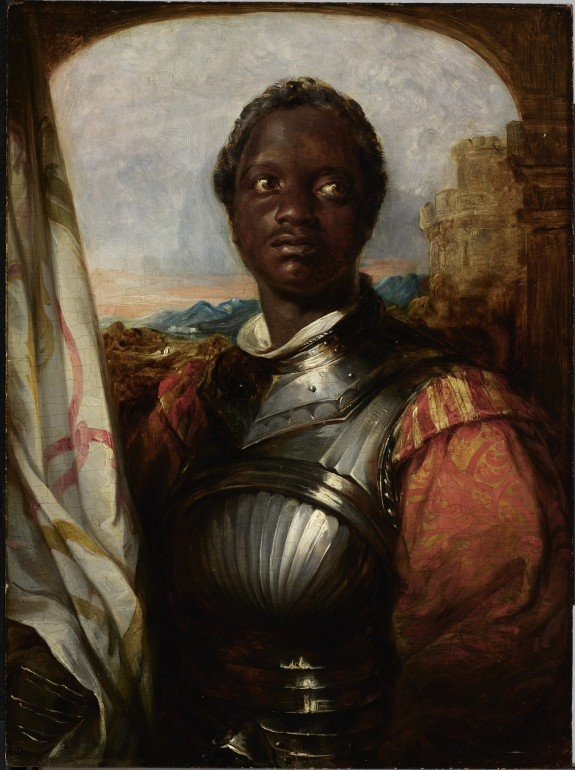
"Intertheatrical Cues and Shakespearean backstories," in Shakespeare et les acteurs, ed. Gilles Bertheau, Actes des congrès de la Société française Shakespeare 39 (2021), pp. 1-16:
"In his essay, Engel focuses on mnemotechnical cues, reminding us of the early modern use of adages as valuable memory aids and, more broadly, also wonders how memory shapes identity. The power of proverbs, he contends, is particularly remarkable in a play such as
Henry V, where the French are regularly derided for their ostentatious behaviour as well as for their highly artificial, stilted language."
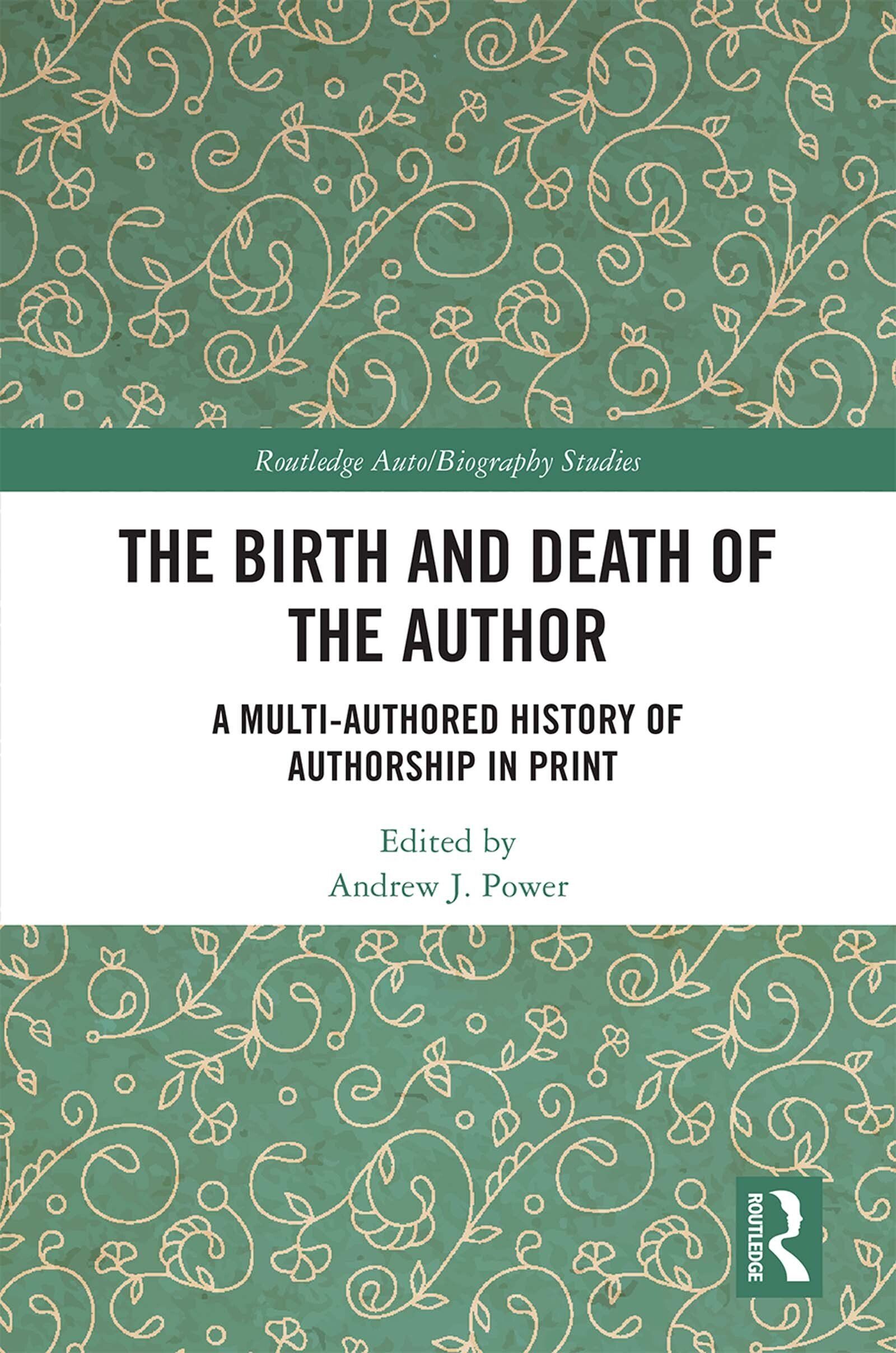
"Melville's 'Bartleby’ and the Prefiguration of the Author's Own Preference Not to Write,” in The Birth and Death of the Author: A multi-authored history of authorship, ed. Andrew J. Power (New York and London: Routledge, 2021) , pp.117-43:
The Birth and Death of the Author is a work about the changing nature of authorship as a concept. In eight specialist interventions by a diverse group of the finest international scholars it tells a history of print authorship in a set of author case studies from the fifteenth to the twenty-first century. Engaging particularly with the history of the materials and technology of authorship it places this in conversation with the critical history of the author up to and beyond the crisis of Barthes's "Death of the Author."
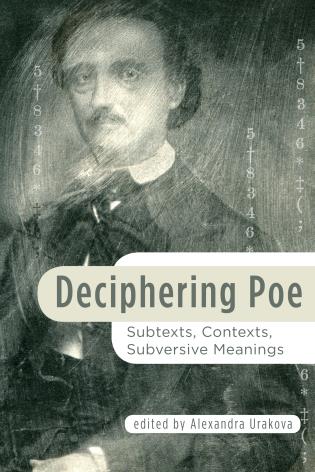
"Fantastic Spaces, Angelic Places," in Poe and Place, ed. Philip E. Phillips (Palgrave, 2018), 169-92. WINNER OF THE DAMERON AWARD FOR 2018
William E. Engel’s impressively researched study of the angelic realm evoked in Poe’s poetry and prose shows it to be a remarkably consistent, fully realized place of Poe’s own design, based on his reading in philosophy and his notions of Middle Eastern cosmologies rather than on conventional ideas of a Christian heaven. -- Poe Studies 52 (2019), pp. E19-E22.
“Rejecting that notion that Lenore of ‘The Raven’ is, as some illustrators have suggested, an inhabitant of a Christian heaven where the departed enjoy everlasting peace, William Engel takes a corrective view, illuminating the ways in which Poe’s unsettling supernal imaginings diverged from consolatory visions of the afterlife conveyed through popular antebellum poetry. ‘An amalgam of Miltonic, Islamic, and Gnostic elements’ (183), Poe’s angels are, Engel insists, remarkable for their mysterious alterity, which leaves them ‘just out of reach of our conceptualization’ (182). Mystery also pertains to the obscure world they tenant, a ‘space of indeterminacy . . . upon which Poe relied to pursue a wider gamut of imaginative and affective possibilities in his writing’ (186), and through a close reading of ‘The Haunted Palace,’ Engel shows how Poe explored those possibilities.” –
The Edgar Allan Poe Review
21.1 (2020), 131-137, p.136.
“William Engel’s chapter on Poe’s angelic imagination aims to recapture its key disturbing ambivalence...to argue that these spaces afford 'a glimpse into the fiery, starry crucible of [Poe’s] own poetic temperament' (184) and suggest an 'aesthetic practice' 'predicated on a metaphysics of absence' (189)” --Transatlantica 2 (2018), 1-6, p.3.
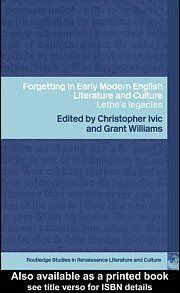

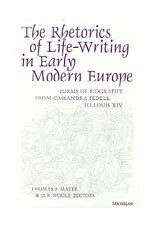
"Montaigne's
Essais: The Literary and Literal Digesting of a Life,"
in
The Rhetorics of Life-Writing in Early Modern Europe , ed. Thomas Mayer and D. R. Woolf (University of Michigan Press, 1996.), 283-98
"The volume is especially timely in light of the growing interest in 'micro-history,,' and in the histories that are emerging from nonliterary documents. Chapters consider numerous genres, including hagiography, epistolary and verse biography, and less familiar forms such as parodic prosopography, life-writing in funeral sermons, and comic martyrology. [...] A fascinating survey of biographical genres...."
FOR CRITICAL ESSAYS IN COLLECTIONS PUBLISHED PRIOR TO 1996,
PLEASE VISIT MY CV
(click here)
FOR LINKS TO PDF VERSIONS OF THOSE ESSAYS.